The Open-Source Rebellion: OpenClaw and the democratization of Agents
In a world of proprietary black boxes, OpenClaw is proving that the most powerful AI systems might just be the ones that are hackable and local-first.
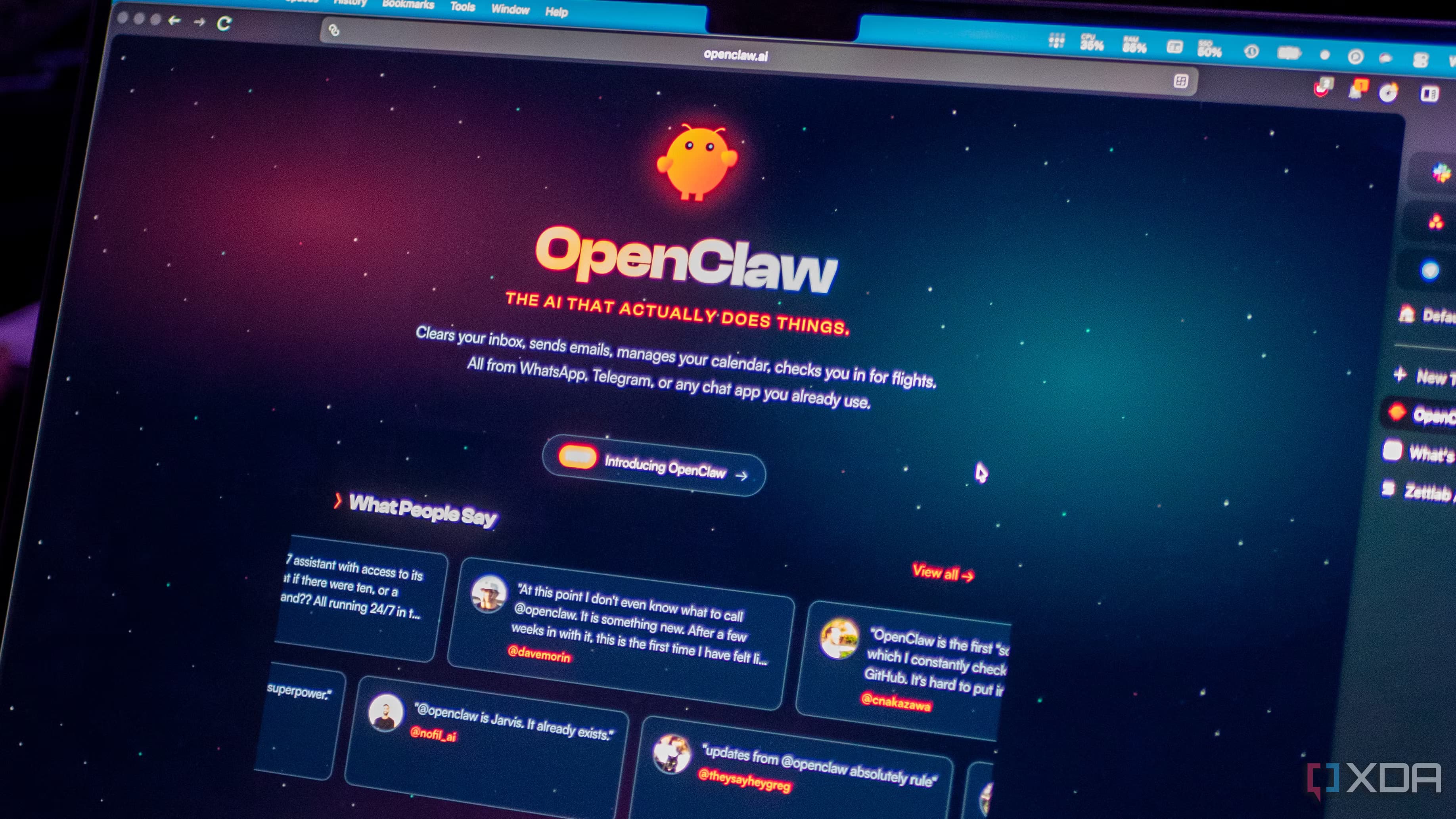
The narrative of AI in early 2026 has been dominated by a few massive, closed-source giants. However, beneath the surface of the cloud-first paradigm, a quiet rebellion is taking place. OpenClaw, the project born from Peter Steinberger's experiments with autonomous agents, has emerged as the torchbearer for a new, hackable future.
The Node-Native Coding Agent
Unlike its proprietary counterparts, OpenClaw (formerly known as Moltbot) is built on a transparent, Node.js-native architecture. Its most significant contribution to the field is the introduction of "Pi" - a minimal, recursive coding agent. Pi doesn't just write code; it has the capability to test, debug, and hot-reload its own environment, effectively allowing the agent to extend its own sets of "Skills" in real-time as it encounters new problems.
Local-First: The Privacy Imperative
A core tenet of the OpenClaw community is data sovereignty. By running entirely on user-owned hardware and interfacing via familiar messaging platforms like Signal or Whatsapp, OpenClaw bypasses the "cloud tax" - both in terms of subscription costs and privacy risks. It represents a shift back to the early days of personal computing, where the user truly owned the machine and its intelligence.
The Future of Open Contribution
With Peter Steinberger's recent move to the OpenAI research team, the OpenClaw project has transitioned into an independent open-source foundation. This move has catalyzed a massive influx of contributors who are building a modular ecosystem of plugins. From automated house-management to complex financial auditing, the "Skills" being built for OpenClaw are proving that community-driven development can match the pace of the world's most well-funded labs.
Why Local-First Wins When Trust Matters
Local-first is not just a preference; it is a trust architecture. When a developer can read the code, inspect the model, and run it on their own hardware, the threat surface shrinks dramatically. That’s why OpenClaw’s stance aligns with the wider open-source ethos championed by groups like the Open Source Initiative and communities across GitHub. The moment a system is auditably local, it becomes eligible for use in sensitive workflows where “send it to the cloud” is not acceptable.
This also changes procurement. Enterprises can pilot agentic tools without extensive data agreements, because they control the full runtime environment. That lowers friction and accelerates adoption, especially in regulated domains.
The Node.js Advantage
Choosing Node.js as the foundation is strategic. It puts OpenClaw in the path of the widest developer base on the planet. The result is a talent pool that can quickly extend agents with familiar primitives like streams, workers, and package registries. For teams already invested in the JavaScript ecosystem, this means faster integration with existing web services, and easier integration with modern tooling in the Node.js runtime.
It also unlocks a vibrant plugin ecosystem. A single agent can compose with dozens of domain-specific modules — compliance checks, QA automation, or infrastructure management — without re-implementing basic plumbing.
What “Skills” Really Mean
OpenClaw treats skills as a first-class interface, not a hack. That is a critical difference. A skill isn’t just a script; it is a contract with inputs, outputs, and permissions. The best plugins evolve into reusable building blocks: “deploy to staging,” “summarize incident logs,” or “validate schema migrations.” This aligns with a broader industry movement toward reusable internal developer platforms, where workflows are codified and standardized.
In a world of runaway automation, standardizing skill boundaries is a safety feature. It makes it easier to reason about what an agent can and cannot do, and to lock down privileged actions behind approvals.
Back to the Human Loop
OpenClaw also hints at a return to “human-in-the-loop” autonomy. The agent is powerful, but it is designed to ask for help when context is missing. This creates a healthier relationship between automation and accountability. It’s the same mindset behind secure messaging tools like Signal: control belongs to the user, not the platform.
Related Reading
Explore the broader ecosystem in The Rise of Local LLMs and the tooling wave in Best AI Tools for Developers. For architectural context, see The Architecture of a Modern AI Native App.
Context and Market Signals
The Open-Source Rebellion: OpenClaw and the democratization of Agents sits inside a wider shift across technology where the winning teams move faster but with more structure. The most resilient strategies combine rapid experimentation with clear guardrails — documented assumptions, measurable targets, and honest post‑mortems when the data disagrees. That discipline turns momentum into durable advantage rather than a short‑lived spike.
Organizations that treat this space as a long‑term capability, rather than a one‑off project, outperform. They invest in repeatable workflows, shared tooling, and cross‑functional alignment so product, engineering, and operations are working from the same map. Guidance from institutions like OECD offers a useful lens when industry narratives become noisy.
For deeper context, pair this analysis with The 10 Best AI Tools for Developers in 2026 and Sustainable Tech: Green Coding Practices.
Operational Implications
A practical takeaway from The Open-Source Rebellion: OpenClaw and the democratization of Agents is that operational design matters as much as product design. If the workflow is fragile, scale makes it worse. The best teams build small, stable primitives that can be reused across projects: templates, playbooks, and shared decision criteria.
This is why mature orgs define how changes move through the system — from proposal, to implementation, to verification — so that iteration never breaks safety. It mirrors modern reliability practices: smaller changes, faster feedback, fewer surprises.
When you anchor execution in observable metrics, improvements compound. That discipline separates sustainable progress from endless churn.
Practical Takeaways
If you are adopting these ideas, start with one high‑impact workflow and make it exceptionally reliable. This is the fastest way to build confidence and organizational buy‑in. Then expand to adjacent workflows once the first system is stable.
Document assumptions in plain language. A good strategy is one that can be explained to a colleague in five minutes and defended with evidence. If you cannot explain it clearly, you likely do not understand it yet.
To go deeper, read The 10 Best AI Tools for Developers in 2026 and Sustainable Tech: Green Coding Practices, which expand on the infrastructure and product implications of this shift.
FAQ for Builders
What is the fastest path to value? Choose a narrow use case, align it to a measurable outcome, and ship in weeks, not months. The objective is to learn quickly, not to perfectly architect the system on day one.
How do you avoid over‑engineering? Make the simplest thing that can be safely tested. Then iterate. Over‑engineering usually comes from unclear goals, not from technical constraints.
Where do standards help? Standards from groups like OECD or the W3C help when interoperability and long‑term maintainability matter.
Risk Management
Every fast‑moving field has blind spots. The most common risks are data quality issues, misaligned incentives, and hidden operational costs. Mitigate these early with clear ownership, consistent review, and a culture that treats setbacks as signals.
If you treat risk as a first‑class input — rather than an afterthought — your roadmap becomes more resilient. This is especially true when you scale into new markets or new user segments.
For a broader philosophical lens on sustainability and craftsmanship, see The Art of Slow Software.
What to Watch Next
Look for three indicators: measurable productivity gains, clear user‑experience improvements, and a decrease in operational incidents. These signals show whether the shift is real or just a marketing narrative.
When the indicators improve together, you have a durable advantage. When only one improves, you are likely optimizing the wrong layer.
For more strategic context, explore The 10 Best AI Tools for Developers in 2026 and Sustainable Tech: Green Coding Practices.
Context and Market Signals
The Open-Source Rebellion: OpenClaw and the democratization of Agents sits inside a wider shift across technology where the winning teams move faster but with more structure. The most resilient strategies combine rapid experimentation with clear guardrails — documented assumptions, measurable targets, and honest post‑mortems when the data disagrees. That discipline turns momentum into durable advantage rather than a short‑lived spike.
Organizations that treat this space as a long‑term capability, rather than a one‑off project, outperform. They invest in repeatable workflows, shared tooling, and cross‑functional alignment so product, engineering, and operations are working from the same map. Guidance from institutions like OECD offers a useful lens when industry narratives become noisy.
For deeper context, pair this analysis with The 10 Best AI Tools for Developers in 2026 and Sustainable Tech: Green Coding Practices.
Operational Implications
A practical takeaway from The Open-Source Rebellion: OpenClaw and the democratization of Agents is that operational design matters as much as product design. If the workflow is fragile, scale makes it worse. The best teams build small, stable primitives that can be reused across projects: templates, playbooks, and shared decision criteria.
This is why mature orgs define how changes move through the system — from proposal, to implementation, to verification — so that iteration never breaks safety. It mirrors modern reliability practices: smaller changes, faster feedback, fewer surprises.
When you anchor execution in observable metrics, improvements compound. That discipline separates sustainable progress from endless churn.
Practical Takeaways
If you are adopting these ideas, start with one high‑impact workflow and make it exceptionally reliable. This is the fastest way to build confidence and organizational buy‑in. Then expand to adjacent workflows once the first system is stable.
Document assumptions in plain language. A good strategy is one that can be explained to a colleague in five minutes and defended with evidence. If you cannot explain it clearly, you likely do not understand it yet.
To go deeper, read The 10 Best AI Tools for Developers in 2026 and Sustainable Tech: Green Coding Practices, which expand on the infrastructure and product implications of this shift.
FAQ for Builders
What is the fastest path to value? Choose a narrow use case, align it to a measurable outcome, and ship in weeks, not months. The objective is to learn quickly, not to perfectly architect the system on day one.
How do you avoid over‑engineering? Make the simplest thing that can be safely tested. Then iterate. Over‑engineering usually comes from unclear goals, not from technical constraints.
Where do standards help? Standards from groups like OECD or the W3C help when interoperability and long‑term maintainability matter.
Risk Management
Every fast‑moving field has blind spots. The most common risks are data quality issues, misaligned incentives, and hidden operational costs. Mitigate these early with clear ownership, consistent review, and a culture that treats setbacks as signals.
If you treat risk as a first‑class input — rather than an afterthought — your roadmap becomes more resilient. This is especially true when you scale into new markets or new user segments.
For a broader philosophical lens on sustainability and craftsmanship, see The Art of Slow Software.
Keep Reading
View all →The Predictive Edge: Why AI Stock Simulators are the New Alpha
Beyond simple paper trading: How high-fidelity AI simulations are allowing retail investors to test strategies against synthetic market agents.
The Solopreneur's Guide to AI Automation
How a single developer can run a million-dollar business using the power of autonomous agents.